The Women Who Paved My Way
Pave HER Way is launching our women's grant applications today. I want to tell you why this mission is so personal to me.
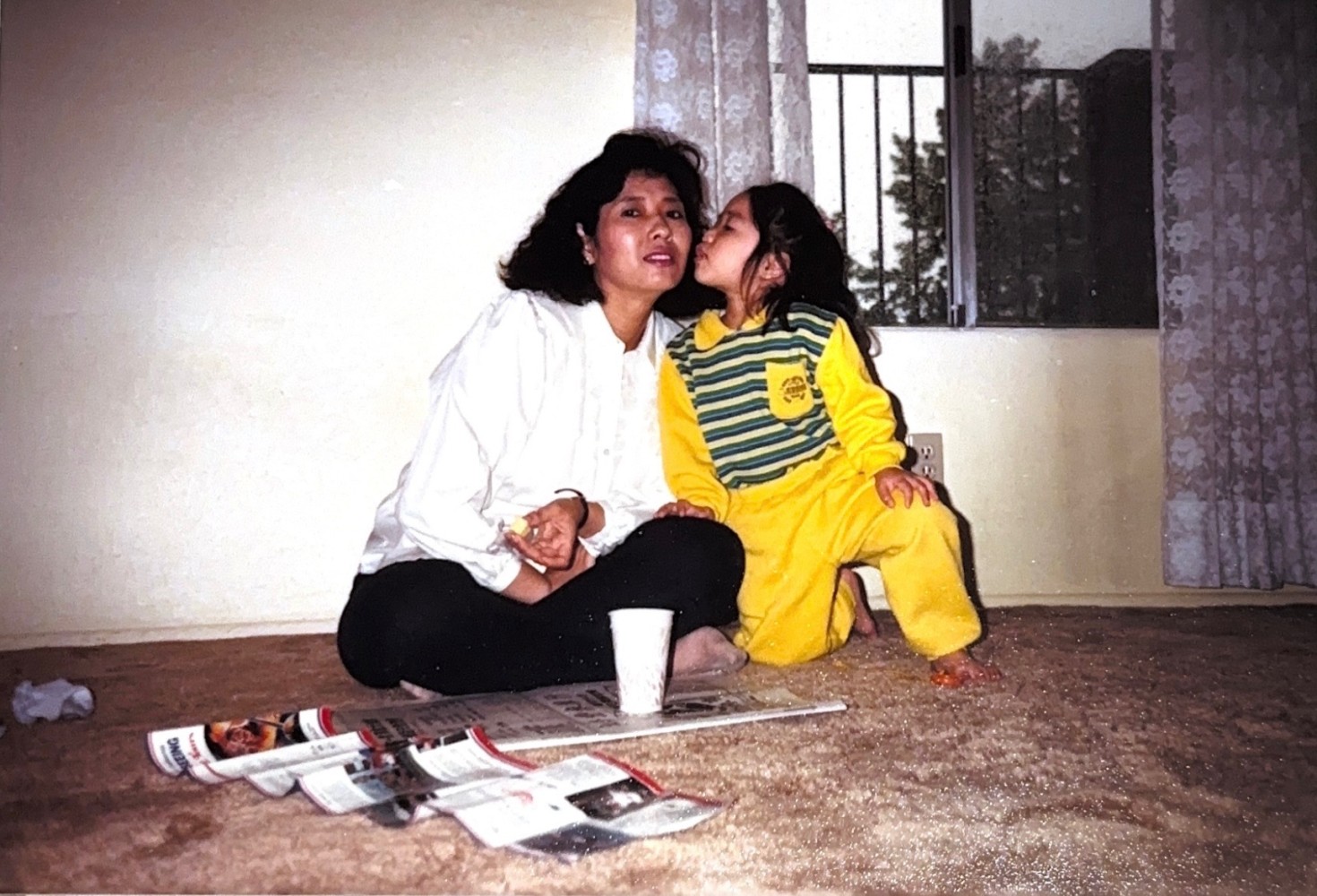
In 1988, my mother and I immigrated from Taiwan to join my father in Northern California.
She was 31.
She was entering a new country without her mother, her extended family, or her closest friends — and, for the first time in her adult life, she was unemployed.
But my mother wanted to work. She was good with numbers, and she was great with people. And my family needed that second paycheck. Still, try as she might, she couldn't find a full-time job that matched her credentials in banking. She wasn't fluent in English. And it was the 80s in America.
Over the next several years, she took on odd jobs, which included providing in-home care for the younger siblings of some kids I went to school with. One year, a parent of one of those kids asked my mother, "Would you be interested in some part-time work at a Chinese school? They're looking for teachers."
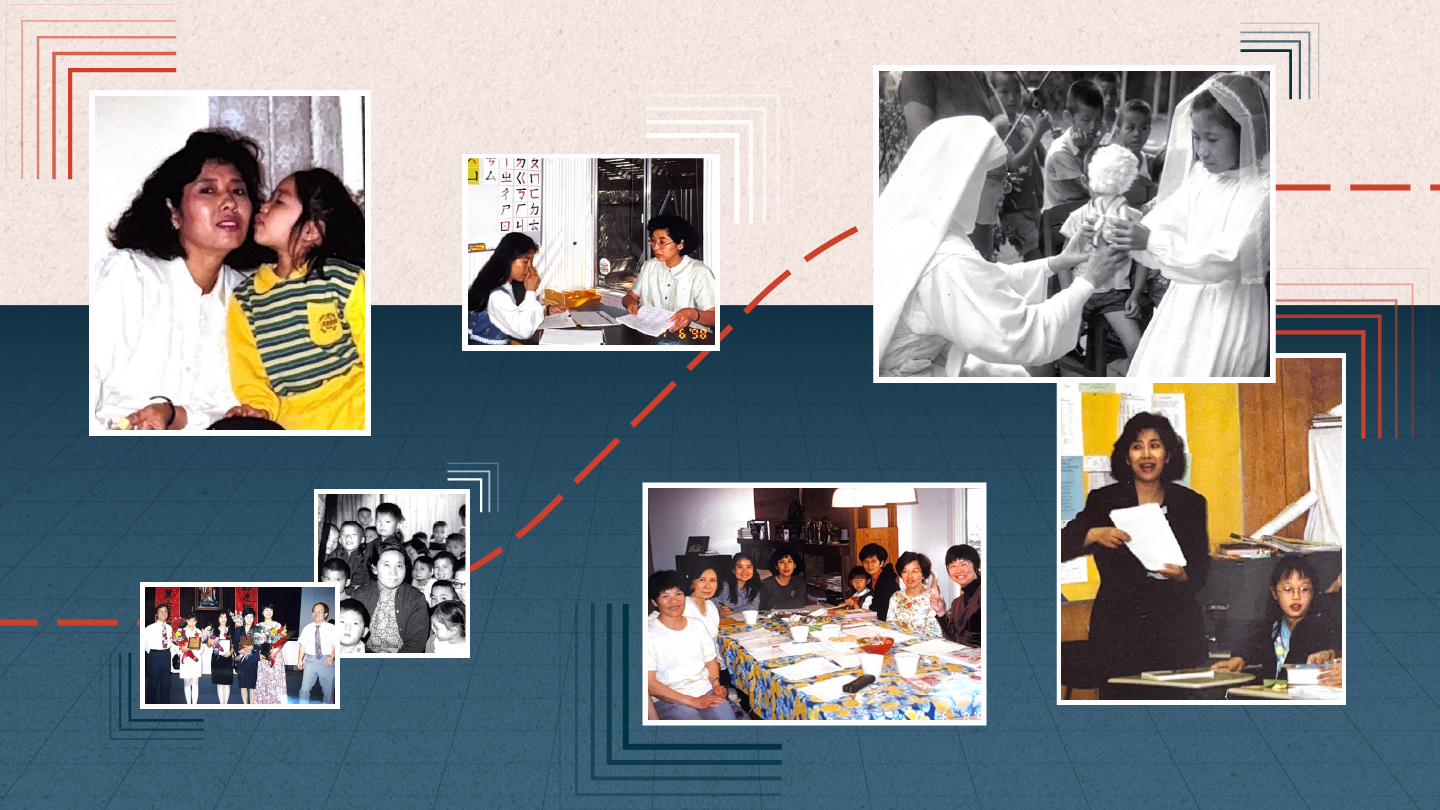
So in 1994, when I entered the third grade, my mother went "back to school". She started out teaching mental arithmetic (an extracurricular course). She was so good at it that, after just one semester, the school principal asked her to also teach one of the fourth grade Chinese language classes.
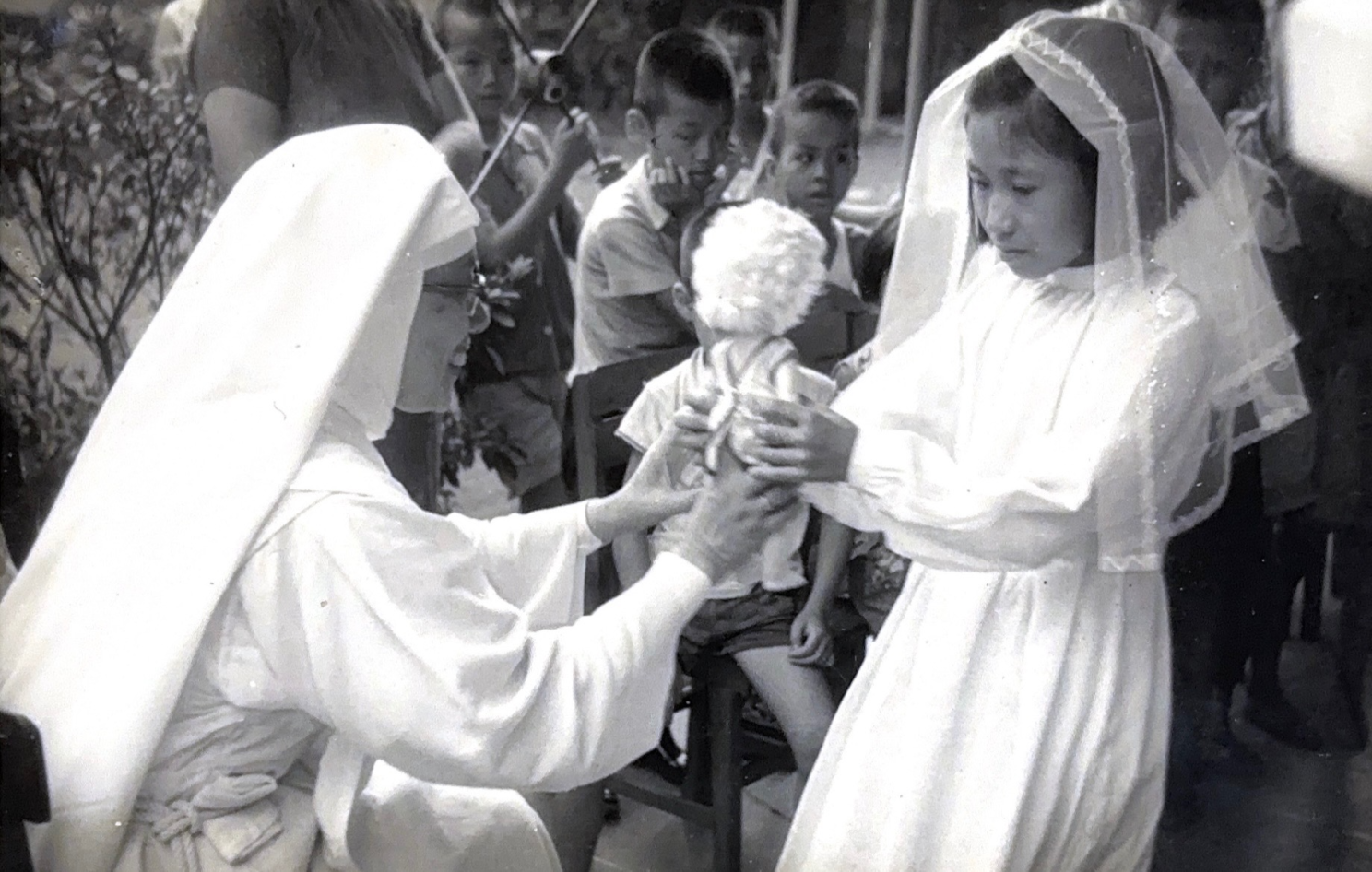
%2C%20teaching%20a%204th%20grade%20Chinese%20language%20class%20at%20Rainbow%20Chinese%20School%2C%201996..jpeg)
Within two years, she became one of a small handful of teachers who won the Northern California Excellence in Teaching Award.
.jpeg)
Eventually (when our family had more financial means), she went from being a paid member of the faculty, to becoming a volunteer school administrator — equivalent to a Co-Chief Academic Officer. In the next few years, we had guests in our living room and at our kitchen table nearly every week. Volunteers, mostly women, were working with my mother to take on their biggest project yet: rewriting the K-12 school curriculum.
%20and%20a%20team%20of%20Chinese%20school%20volunteers%2C%201998..jpeg)
In those years, my mother's Chinese school community became my family's closest friends. Not only did they come together to build a powerful new curriculum, they also became a peer village that helped each other out. The parents who had older children shared parenting resources, learning materials, tips and tricks — all of which benefitted my (and my sister's) personal and academic development. My parents found their insurance agent and their financial planner through this community. I found friends my own age and older — some of whom I've remained close with to this day. Because these women supported one another, I grew up surrounded by opportunities my family could not have created alone. I received access to discounted piano lessons, and got a free head start on SAT and college preparation.
But the greatest gift I received in those years was: getting to see my mother shine.
%20and%20her%20Co-Chief%20Academic%20Officer%2C%201998..jpeg)
I always knew my mother was talented. But it was one thing to believe it, and another to see it with my own eyes. I witnessed, in my own living room, my mother's gift for building community. I saw how much the women around her respected her work ethic, appreciated her thoughtfulness, and believed in her vision.
And I experienced what they made together. The new curriculum rolled out in 1999, and was so widely successful that the Northern California Association of Chinese Schools decided to adopt it for all of the schools in their network. This curriculum would go on to impact an estimated 100,000 Chinese American families and children for the next couple of decades.
And I — sitting in the rooms where it all started — began my lifelong love for service, education, and community. So much so that I would not have the career I have today, were it not for that powerful image of my mother and her friends chasing their talents, and doing their part in the world to make it better.
So: To me, empowering women to lead is not just a nice thing to do for women. It is the necessary thing to do for their families, their communities, and the vast world of societies that become better when we live inside their vision.
Our Why
When women are empowered to lead — with their full vision and voice, rather than just a token seat at the table — the world becomes more collaborative, more peaceful, and more prosperous.
But their road to leadership requires access.
Despite being 51% of the U.S. population, women make up only one-third of the STEM workforce, only 28% of law firm partners, and only 11% of CEOs of Fortune 500 companies. Women currently hold less than one-third of the voting seats in Congress, and face similar representation gaps in our state and local governments.
Many structural barriers continue to prevent women from becoming the leaders that our society needs them to be.
My mother didn't need anyone telling her to "lean in". She needed access to a first opportunity. Access to people who recognized her talent. Access to a community that supported her. And, eventually, access to a platform where her talent could compound into something much larger than herself.
That is what Pave HER Way is designed to provide.
Our How
My mother didn't become a leader through one intervention. She got there through a series of opportunities — and, just as importantly, through the women who helped open those doors.
That's the thinking behind Pave HER Way. Our model rests on four pillars:
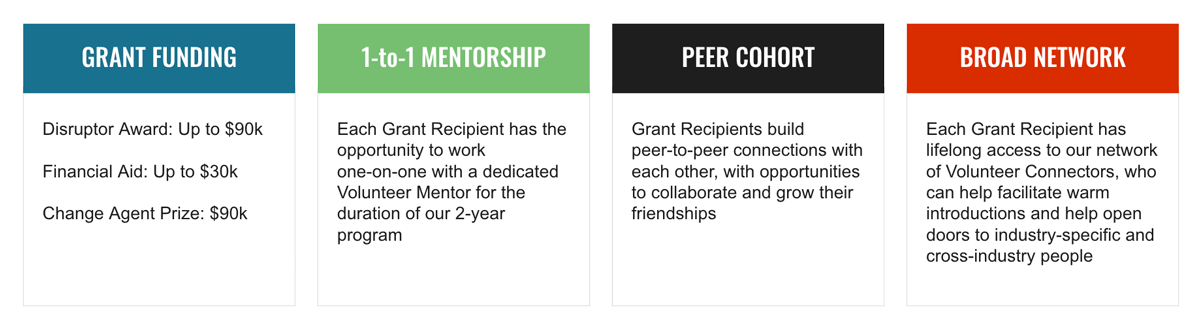
Here's why each of these pillars matters:
- Grant Funding: This gives her resources to act — to address personal hardships, pursue her education, build her startup idea, and further the impact of her work on other women and girls.
- 1-to-1 Mentorship: This gives her someone in her corner — someone who can offer guidance, perspective, introductions, and sponsorship. Women are 5X more likely to be promoted in the workplace when they have mentors.
- Peer Cohort: This surrounds her with women who get what she's going through. In male-dominated fields, women experience greater belonging, motivation, and confidence when they have the support of women peers.
- Broad Network: This opens doors that she can't open by herself. Connectors can provide the introductions, endorsements, and social capital that create opportunities she might otherwise never encounter.
Epilogue
There's a story my mother has told me many times. It goes something like this:
"Your grandmother and grandfather both left mainland China for Taiwan in the early 1950s. Neither had more than a middle-school education. Their early years in Taiwan were hard, and our family lived in poverty.
"But your grandmother was the architect of our family's exit from poverty. She worked odd jobs herself to make ends meet and built friendships with women in our village — who wound up helping our family. She took us to church every week, because she wanted her kids to learn the value of service.
"And from those humble beginnings, all of us kids — your uncle, your aunt, and me — finished college. And though each of us experienced financial stress in our lives, none of us had to raise our kids in poverty."
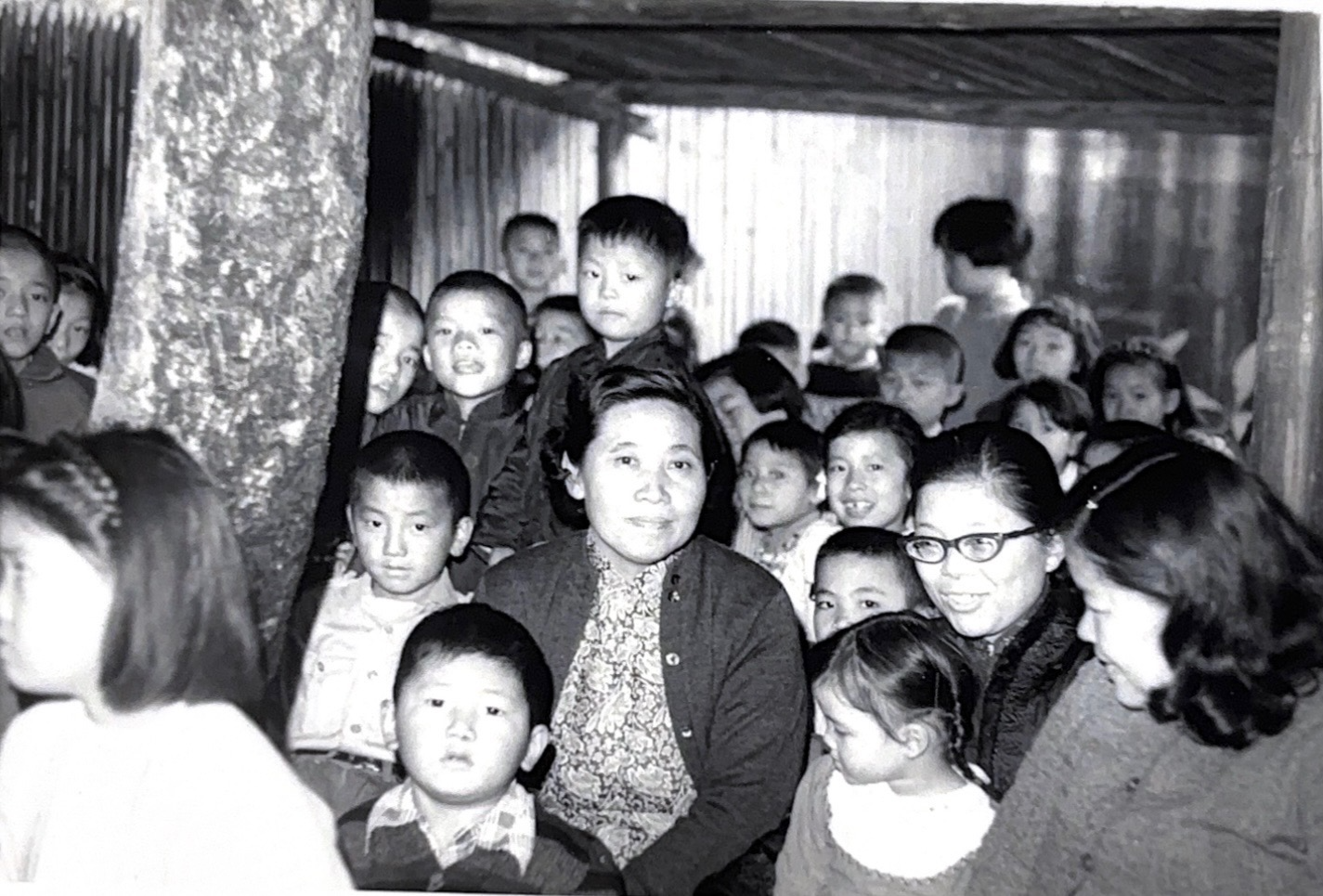
We can't find a photo of my mother and grandmother in the same frame. Legend has it that only one such photo was ever taken, and framed, but we haven't been able to locate it.
You see: My grandmother died long before I was born — when my mother was only 20-years-old. I never got to meet her. But her legacy lives on through her children, each of whom found their own unique way to give back to society, and to raise kids who would do the same.
From a village far, far away, in a time long, long ago, my grandmother planted the seeds that paved my way.
And now I get to do the same for others.
That's why Pave HER Way exists.
Our women's grant applications open today at noon Pacific Time.
If you have a vision worth pursuing, I hope you'll apply.